You were guessing, now you're not

Metisyne connects what you know about your customers with what's happening in the market right now, so decisions about who to reach, what to say and where to spend are made with evidence instead of assumption.

Guessing is the most expensive line item in your budget


It never appears on a report, because it's counted in what didn't happen: the sales that went elsewhere, the customers who never heard from you and the moments that passed.

  1. Spend on people who were never going to buy

    When the customer you plan for isn't the one who buys, the budget pays for clicks and placements that were never going to become a sale. It doesn't look like waste. It looks like a campaign that underperformed.

  2. Customers who were ready, and bought elsewhere

    The people looking for what you sell saw a message written for someone else. Each one is a sale that went to a competitor.

  3. Moments that passed while you were guessing

    Demand moves with the season, the search and the conversation. By the time a guess is corrected, the people who were ready have moved on.

This quarter's budget

  • Paid media
  • Content
  • Agency
  • Events
  • Tools and data
GuessingNever on the report
An illustration, not real figures.

What makes the work harder than it should be


None of this comes from a lack of effort. It comes from a customer who gets harder to see at every step.

  • Leadership

    Leadership describes one customer, and the ads describe another

    The profile lives in a strategy deck. The work happens in tools that never saw it.

    What changes for leadership
  • Organic

    The keyword list has become the audience

    Search data describes queries, not people, so plans are built on words instead of the customer behind them.

    What changes for organic
  • Paid media

    Every message is tested live, with real budget

    With no way to test first, the launch becomes the test, and the budget pays for what you learn.

    What changes for paid media
  • PR

    Shifts in sentiment arrive late, often from the CEO

    An overall score hides the audience that just moved. You find out when someone above you asks.

    What changes for PR

Your data shows what people did, not who they are or why


Most of the data a team works from counts searches, clicks and mentions. None of it carries what you know about your customer: who they are, what they're trying to get done and what would make them choose you. So the numbers make the decision, and the person behind them is lost. Metisyne puts that context back. It connects the customer you describe to what they actually search, say and do in the market.

What they typed

What they're trying to do

Customer MissionDecide · Functional

When our team outgrows the spreadsheet, I want to find a CRM my reps will actually use, so that we stop losing deals between the first call and the follow up.

When the guessing stops


Decisions get easier to make, and easier to defend.

  1. 01Target Audience

    Know who your best customers are, and where to find them

    Describe your customer in your own words. Metisyne adds what they search, where they talk and how they see you and your competitors, so you know exactly who you're for and where they are.

    See Target Audience
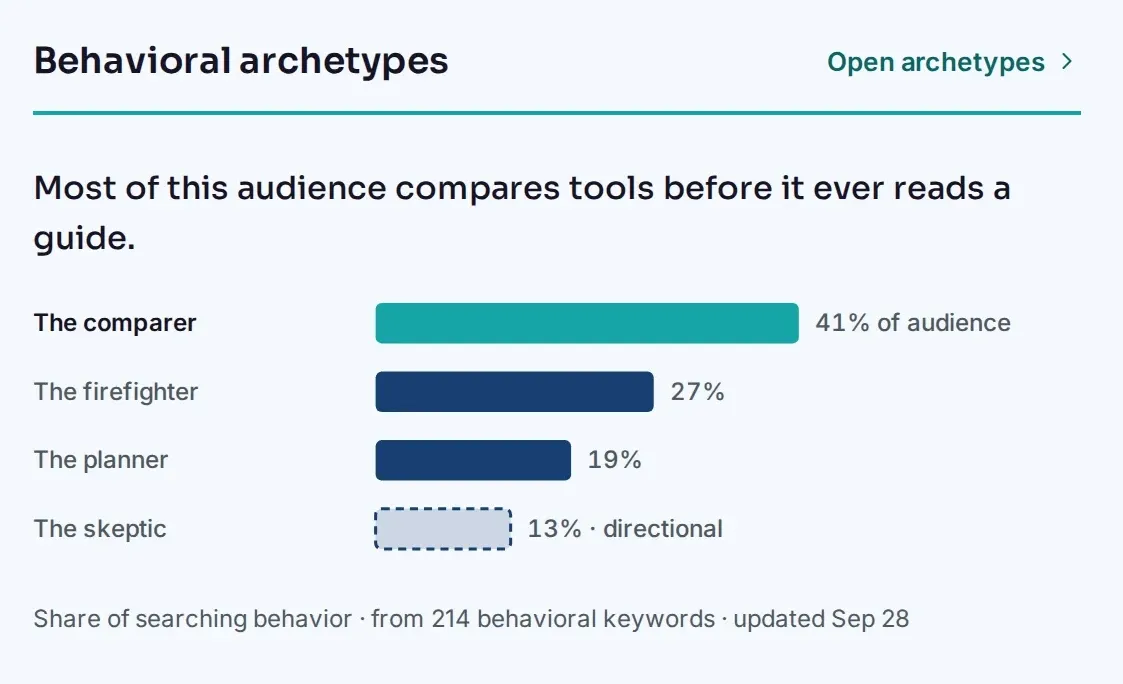
    Behavioral archetypes: most of this audience compares tools before it ever reads a guide. The comparer is 41% of the audience, the firefighter 27%, the planner 19% and the skeptic 13%, marked directional.
  2. 02Planning

    Size the idea before you fund it

    See how big the opportunity is for your audience, which channels fit, who you're up against and the angle nobody else is using, before any budget is committed.

    See Planning
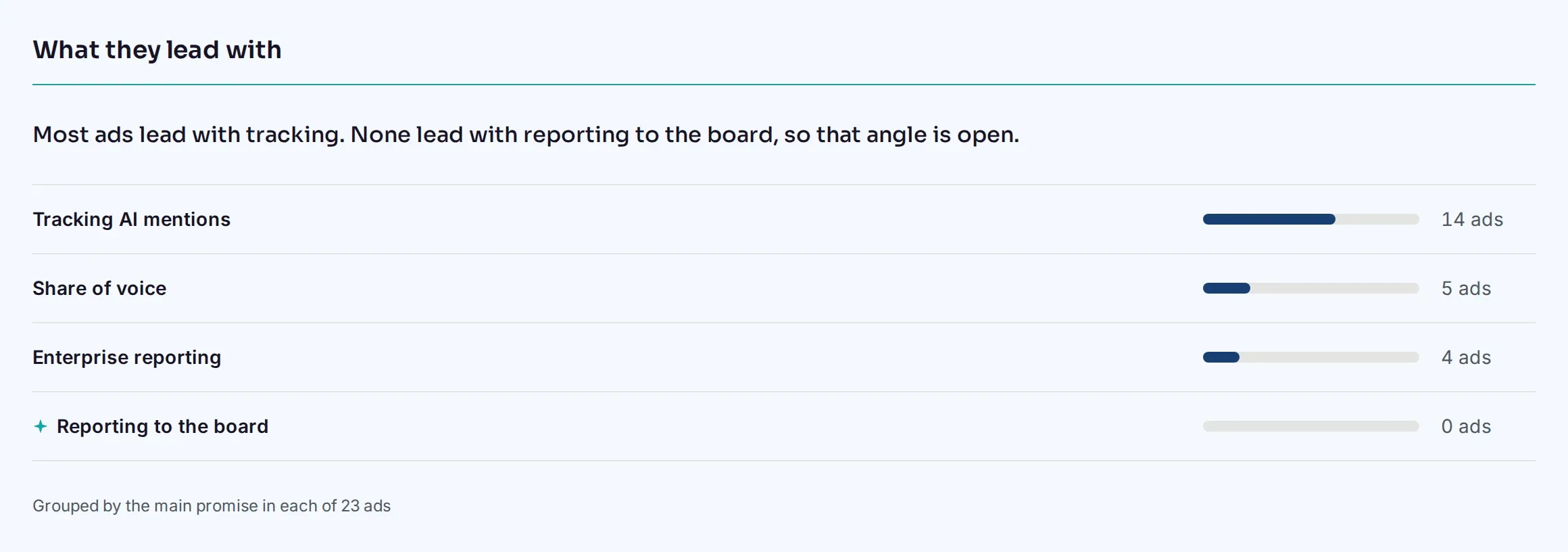
    What similar ads lead with: most lead with tracking AI mentions, and none lead with reporting to the board, so that angle is open.
  3. 03Focus Groups

    Know a message will land before you pay for it

    Test ideas, messages and campaigns with Synthetic Audience Segments built from your profiles and current market data. Every answer comes with its reasoning and the sources behind it.

    See Focus Groups
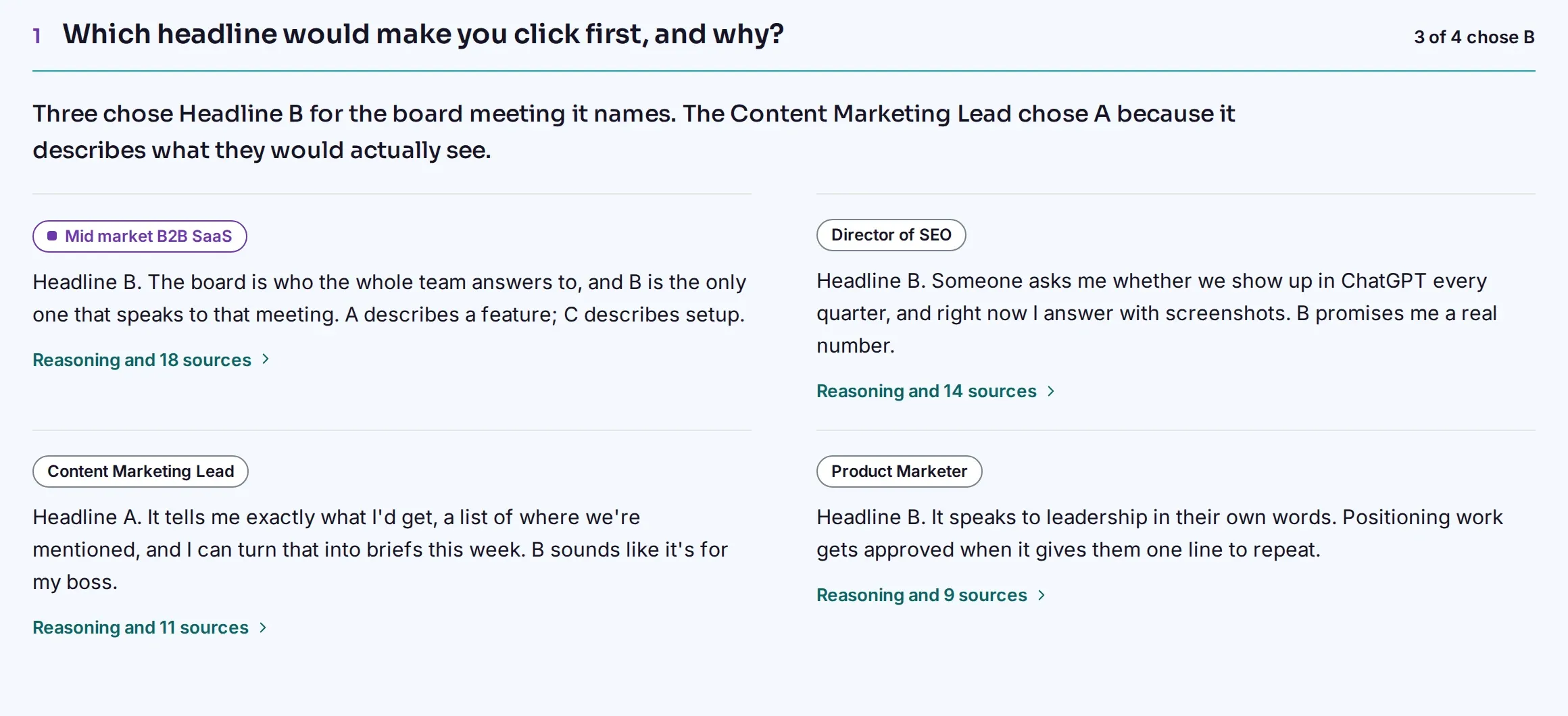
    One Focus Group question, which headline would make you click first and why: three of four segments chose Headline B for the board meeting it names, each answer with its reasoning and the number of sources behind it.

You describe the customer. Metisyne fills in the evidence.


Start with the customer in your own words. Metisyne adds what they search, what they say in online communities and how they see you and your competitors, and the profile matures as the data does.

Using industry, market and first party data

Head of Content

Persona · Mid market B2B SaaS

Enriched Sep 28

Trying to
Choose topics by audience match and opportunity, not just volume
Searches like
Compares tools before ever reading a guide
Talks it over in
SEO forums and private peer groups
Sees you as
Useful, but hard to justify on price
  • Use data for perspective

    Data helps you see people more clearly. It never replaces them with a number.

  • Trust through accuracy

    Every answer shows its sources, and where the data is thin, we say so.

  • Build for humans.

    Plain language, clear reasons, and work that starts and ends with people.